Adjara
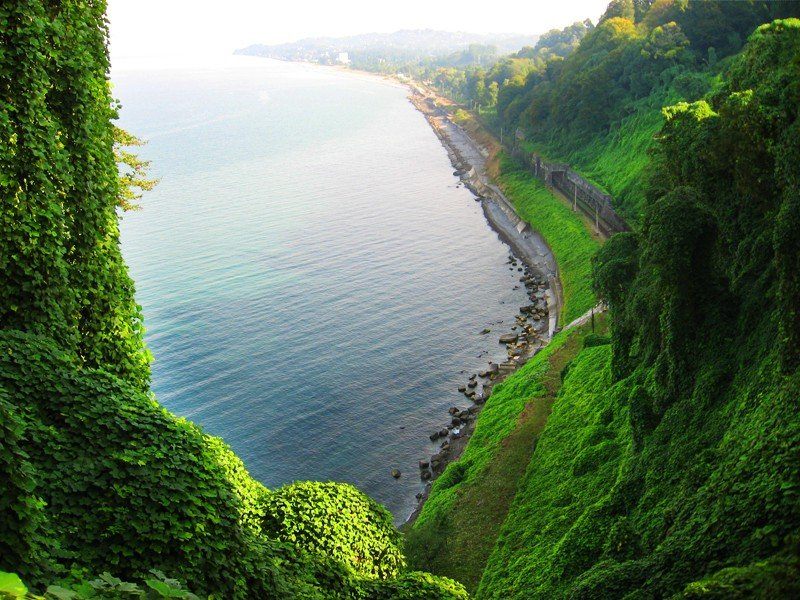
Adjara is an autonomous Republic of Adjara within Georgia, located in the extreme southwest of Georgia. Surrounded by greenery and washed by the Black Sea all year round, the ancient land at the foot of the mountain ranges of the Lesser Caucasus is extremely beautiful and distinctive. It has a magnificent mild climate and majestic nature. A small plot of land contains sea beaches, mountain ranges, velvet forests, crystal waterfalls, stone gorges, bottomless lakes, foaming rivers and many other wonderful natural objects. The famous resorts of Adjara with beautiful beaches, which attract many tourists, are especially picturesque. But it is not only the enjoyment of the warm sea, magnificent mountain landscapes and subtropical nature that makes Adjara a popular holiday destination. Here, vacationers can plunge into the unique exoticism of this region, expressed in a motley mix of eastern and Western cultures – taste delicious national dishes, witness the traditional way of life of hospitable Adjarians, enjoy visiting ancient monuments, and purchase original souvenirs.
Significant investments have been made in the development of Adjara's tourism infrastructure over the past decade, and today it is at a new stage of its rapid development.
Newly renovated and newly built sanatoriums, boarding houses and hotel complexes will remind tourists in Adjara of the atmosphere of famous Mediterranean vacation spots. The cities and resorts of Adjara have excellent conditions for all kinds of entertainment and sports: rock climbing, hunting, fishing, picnics and water sports.
The climate throughout Adjara is classified as subtropical. The fairly high humidity, which lasts throughout the year, allows you to safely relax in it, even for those people who are not recommended in countries with hot sun.
The tourist season in Batumi lasts from about the second half of May to the middle of October. For those who like a warm and comfortable sea, the summer months and September are more suitable. Precipitation does not occur frequently during this period. A little refreshing rain is quite possible to wait out, even without hiding under an umbrella or canopy.

Batumi is a city and port in Georgia, on the Black Sea coast, the capital of Adjara and the main tourist center of modern Georgia.Today, Batumi is the most important cultural, economic and tourist center of Georgia. It is famous for the historical city center and the modern tourist area with skyscrapers.
The history of the city of Batumi is only 150 years old, and the previous era is uncertain. Batumi is a young city and for this reason is devoid of ancient temples, fortresses and monasteries.
There are theories that there was some kind of settlement on the site of Batumi in antiquity. Simply because the only bay on the eastern side of the Black Sea could not go unnoticed. The name of the city was associated with the Svan word "bat", and correlated with the city of Batus mentioned by Aristotle and Pliny.
Walking around Batumi, you can see and visit many of the sights of this wonderful city. On Europa Square in the center of Batumi stands the statue of Medea, which is a symbol of Georgia's wealth and prosperity. There are several Georgian churches, a Russian church, an Armenian church, a synagogue, a mosque and one Catholic church in Batumi. The New Boulevard of Batumi begins from the Park of Miracles, where you can see the sculpture of Ali and Nino, a symbol of acceptance and understanding that religion and ethnic hatred should not be a hindrance to love. There is also an Alphabet Tower in the park, which is a symbol of Batumi, designed to perpetuate the Georgian alphabet. By visiting the cable car, you can take a closer look at the areas of Batumi that are usually beyond the sight of tourists. From the observation deck, you can see the port, the buildings of the new and old cities, and the mountains of Adjara.There is a Botanical Garden 10 km north of Batumi. It is a huge tropical forest, which should be visited for at least 2-3 hours, or preferably half a day or a whole day to relax on the beaches of Cape Verde.
There are three popular resort villages in the south of Batumi:Go ahead, Kvariati and Sarpi. They are located up to the Chorokhi River, so the sea water there is considered cleaner and more transparent than in Batumi.Gonio is home to the Gonio-Apsaros fortress from the time of the Roman Empire. The history of the fortress dates back several millennia. The oldest archaeological strata excavated by archaeologists on the territory of the fortress date back to the XV-XVII centuries BC. There is a legend that the name Apsaros comes from the ancient Greek myth of the Argonauts. According to legend, Apsirt, the son of King Aetha, who was killed by Jason, was buried at this place. There are many legends and myths associated with the Gonio-Apsaros fortress. Grave grave is located on the territory of the fortress, which today is considered to be the tomb of the Apostle Matthew– one of the twelve apostles of Jesus Christ, whom the Savior accepted into his circle instead of Judas Iscariot. According to one version, the apostle Matthew came to Gonio fortress after the death of Christ and stayed here to preach. The grave of the Apostle Matthew is located on the territory of the Roman praetorium (Latin for "tent of the commander"). Since the Gonio-Apsaros fortress was built at the beginning of our era as a stronghold of the Roman troops, the praetorium in this case was called the residence of the Roman general commanding the garrison. The pretoria remains include huge stone pedestals in the form of crosses, which presumably stand over the grave of the Apostle Matthew. The history of Gonio Fortress is still fraught with many mysteries. Archaeological excavations are still underway here, and scientists are making many new discoveries, such as a treasure found near the southern wall in 1974, dating back to the 5th century AD. Based on the enormous historical and cultural significance of the Gonio Fortress, the Georgian government declared it a museum reserve in 1994.
At a distance of 30 km east of Batumi, you will find yourself in mountainous Adjara, specifically in the Keda region, a real oasis of silence and fresh air! In tourist farms, you can taste local wines made from such unique grape varieties as Cedar "Tsolikauri" and "Chhaveri".Keda is known for its healing mineral waters and baths. The waters "Kokotauri" and "Gundauri" are useful for diseases of the gastrointestinal tract. The medical water "Kokotauri" has been awarded an international certificate.During the summer season, you can refresh yourself in the highest waterfall of Adjara, Mahuntseti, surrounded by greenery, and 500 meters from it stands an ancient bridge dating back to the reign of Queen Tamara.
